
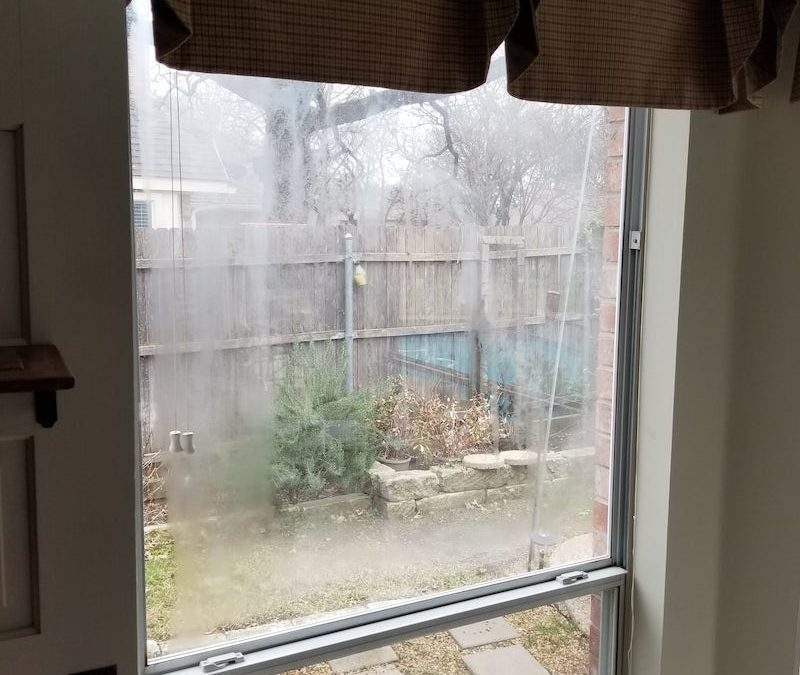
You wash the glass, step back, and the haze is still there. No amount of cleaning helps, because the cloudiness is not on the surface. It is trapped between the panes. If that sounds familiar, you are dealing with one of the most common window problems we see in Mansfield and across DFW: a failed double-pane seal.
The good news is that foggy windows are rarely an emergency. The question is what to do about them. Should you repair, replace just the glass, or replace the entire window? This guide helps you sort through it.
What Is a Double-Pane Window, Exactly?
A double-pane window, also called an insulated glass unit (IGU), consists of two sheets of glass separated by a spacer and sealed around the edges. The sealed gap in the middle is typically filled with dry air or an insulating gas such as argon. That sealed layer is what gives the window its insulating value.
As long as the seal holds, the space between the panes stays dry and clear. When the seal fails, everything changes.
What Causes Foggy Windows?
The seal around an insulated glass unit is not permanent. Several things wear it down over time.
Heat and Sun Exposure
In Texas, glass and frames can get very hot, then cool off at night. This daily expansion and contraction stresses the sealant, particularly on west-facing windows that take long afternoon sun.
Temperature and Pressure Swings
Rapid changes between hot and cold, or changes in barometric pressure, make the air inside the unit expand and contract, pushing against the seal.
Age and Material Wear
Sealants simply degrade over the years. Some earlier or lower-grade units were built with less durable seal systems.
Moisture Exposure
Water that sits against the edge of the unit, perhaps from a poorly flashed frame or a clogged drain path, can speed up seal failure.
Manufacturing or Installation Defects
Occasionally a unit has a flaw from the start, or was handled or installed in a way that stressed the seal. If your windows are fairly new, check your warranty.
How Do You Know It Is a Failed Seal?
Look for these clues:
- Fog, haze, or water droplets between the panes that cannot be wiped away.
- Mineral-like streaks or a milky film inside the glass, left behind as trapped moisture evaporates and recondenses.
- Condensation that comes and goes, often more visible on humid mornings or after temperature swings.
- Reduced comfort near the window, since the insulating gas has likely escaped.
Compare this with condensation on the interior surface, which is typically a humidity issue in the home, or on the exterior surface, which is normal on some mornings with efficient glass. If you can wipe it off, it is not a seal failure.
Does a Failed Seal Matter?
Yes and no. The window still keeps wind and rain out, and it still works as a window. But the seal protects the insulating value, so a failed unit generally performs worse than a sealed one. You may notice more heat coming through in summer, and the view is permanently hazy, which many people simply find annoying.
Left alone, fogging usually gets worse over time, though it is not typically dangerous. The decision is more about comfort, appearance, efficiency, and cost.
Your Options
Option 1: Do Nothing for Now
If the affected window is in a rarely used room and the haze does not bother you, waiting is a legitimate choice. Just be aware the problem will not fix itself.
Option 2: “Defogging” Services
Some services drill small holes in the glass, clean the interior surface, and install a vent to let moisture escape. Results vary. The cleaning can improve appearance, but the unit’s insulating gas and seal are generally not restored, so you may not regain full efficiency.
If appearance is your only concern and the budget is tight, it may be worth asking about, but it is not the same as replacement.
Option 3: Replace the Insulated Glass Unit
If the window frame is in good shape, the sash and hardware work well, and the glass unit is the only failed part, replacing just the IGU can be an economical option. A new sealed unit is made to the exact size and installed in the existing frame.
This restores clarity and insulating performance and can also be a chance to upgrade to Low-E glass.
Option 4: Replace the Entire Window
If the frame is warped, rotted, corroded, leaking, or hard to operate, putting a new glass unit into a tired frame rarely makes sense. In that case, a complete window replacement is often the better long-term value, particularly if several windows around the house are showing problems.
A Simple Decision Framework
Ask yourself:
- How is the frame? Solid and square, or soft, warped, or leaking?
- How many windows are affected? One or two, or many?
- How old is the window? An older window likely has other limitations.
- Do you want better efficiency? A new window or upgraded glass unit can improve performance.
- Is the window still under warranty? Some manufacturers cover seal failure for a set period.
If the frame is in good condition and only one or two units are affected, glass replacement is often worth pricing out. If problems are widespread or the frames are failing, replacement is likely to serve you better.
Why Whole-House Patterns Matter
If one window has failed, others of the same age and style may follow. If you are planning to stay in the home for years, it can be smart to ask for an assessment of every window rather than fixing them one at a time.
Sometimes a phased plan, starting with the worst or the hottest exposures, spreads the work and cost out sensibly.
What About Energy Efficiency?
A failed seal reduces the window’s insulating ability, but actual impact on your bills depends on the number of windows, your insulation, and your cooling system. We will not quote a made-up savings figure.
What we can say is that upgrading to modern Low-E glass during a repair or replacement is a good way to improve comfort in a Texas summer. Our post on Low-E windows covers this in detail.
Common Mistakes to Avoid
- Assuming cleaning will fix it: If the haze is between the panes, surface cleaning will not help.
- Using sealant to patch the exterior: A bead of caulk will not restore a failed internal seal.
- Ignoring the frame: Replace the glass in a bad frame, and you may be paying twice.
- Waiting until the whole house is affected: Early assessment lets you plan.
Working With a Local Team
Mansfield Glass & Windows has been a full-service glass retailer and installer in DFW for more than 25 years. We are family-operated and woman-owned, fully insured, and we source glass from local suppliers, which helps us turn around custom insulated units.
We would rather give you an honest recommendation, even if it means a simpler repair, than push a bigger project than you need.
If cost is on your mind, we offer 0% financing, which you can learn about on our financing page.
Frequently Asked Questions
Can Foggy Windows Be Fixed Without Replacing Anything?
Defogging can clear the visible haze in some cases, but it generally does not restore the sealed insulating space. It is best viewed as a cosmetic fix.
Is Fog Between Panes Dangerous?
No, it is not typically a safety hazard. It is mostly a matter of appearance and efficiency.
Can You Replace Just the Glass and Keep My Frame?
Often yes, if the frame is sound. We will inspect the window and tell you whether that makes sense.
How Long Does Glass Unit Replacement Take?
Units are made to size, so there is a measuring step and a fabrication period before installation. Ask for current timing when you contact us.
Will My Homeowner’s Insurance Cover It?
Seal failure from age is usually not covered, but storm damage might be. Check with your insurer.
Do You Also Service Commercial Windows?
Yes. Visit our commercial page.
Helpful Links
Get an Honest Opinion on Your Foggy Windows
Call or text (817) 473-3909, visit 7489 Rendon Bloodworth Rd, Mansfield, TX 76063, or contact us through our contact page.
We will take a look, explain your options, and help you choose the repair that fits your home and budget.