
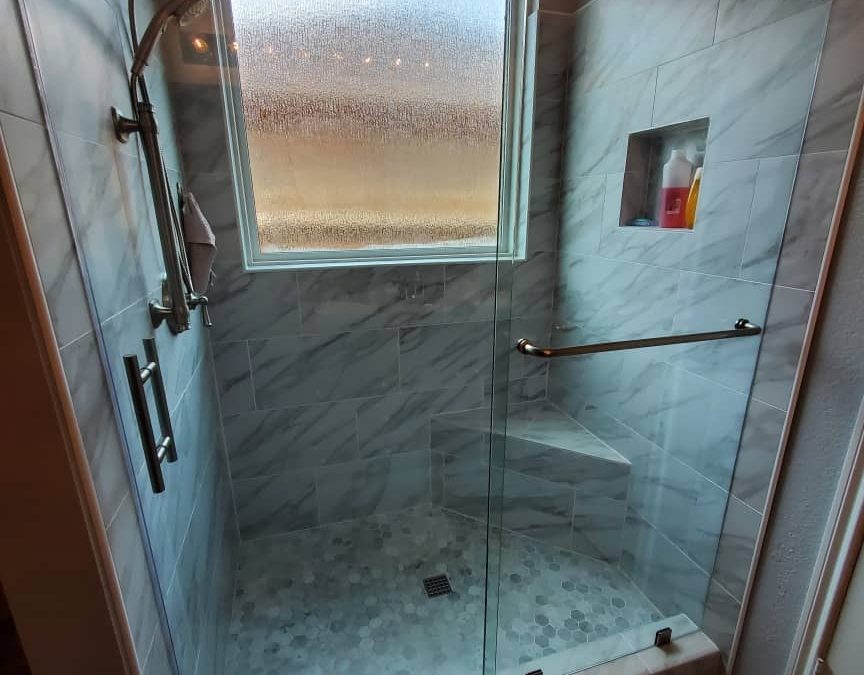
If your shower glass looks cloudy no matter how much you scrub, you are not alone. Across Mansfield and the rest of North Texas, hard water is a fact of life, and it leaves its signature on glass: white spots, chalky streaks, and a dull film that makes a beautiful enclosure look tired.
The encouraging part is that much of this buildup can be removed at home with ordinary supplies and a little patience. Once the glass is clear again, a few simple habits can help keep it that way.
As a family-operated glass company that has worked on showers around DFW for more than 25 years, Mansfield Glass & Windows shares these practical tips for cleaning and maintaining your shower glass.
Why Hard Water Leaves Marks on Glass
Hard water contains dissolved minerals, mainly calcium and magnesium. When a water droplet dries on your shower glass, the water evaporates and leaves those minerals behind. Over time, repeated droplets create the white spots and cloudy film you see.
Soap scum can make the problem worse. Soap combines with minerals in hard water to form a sticky residue that attracts dirt and makes glass look even duller.
Two different problems are often mistaken for one another:
- Surface deposits: Minerals and soap residue sitting on top of the glass. These can often be removed with the right cleaning method.
- Etching: Mineral deposits left on glass for a long time can damage the surface, leaving permanent haze. Etching is much harder—and sometimes impossible—to reverse at home.
That is why regular cleaning is important. Removing deposits early can help prevent buildup from becoming a bigger problem.
What You Will Need
Gather these supplies before you begin:
- White vinegar or a cleaner specifically formulated for soap scum and mineral deposits
- Warm water and a spray bottle
- Soft microfiber cloths
- A non-scratch sponge or soft cleaning pad
- A shower squeegee
- Baking soda for stubborn spots, if suitable for your glass
- An old toothbrush for tracks and corners
- Rubber gloves
Cleaning Products and Tools to Avoid
Avoid steel wool, abrasive powders, harsh scouring pads, and razor blades unless the glass manufacturer specifically approves them and you know how to use them safely. These can scratch the glass or damage protective coatings.
Never mix cleaning products. In particular, mixing bleach with acidic cleaners such as vinegar or with ammonia-based products can release dangerous fumes. Keep the bathroom ventilated while cleaning, and follow the instructions on every product label.
Step-by-Step: Removing Existing Hard Water Stains
Step 1: Rinse and Wipe the Glass
Start by rinsing the glass with warm water to loosen surface dirt and soap residue. Wipe it with a damp microfiber cloth so the cleaning solution can work more effectively on the remaining deposits.
Step 2: Apply a Vinegar Solution
For suitable, uncoated glass, mix equal parts white vinegar and warm water in a spray bottle. Spray the affected areas generously and let the solution sit for about 10 to 15 minutes.
The mild acidity can help loosen mineral deposits. For vertical glass, you can soak a soft cloth in the solution and hold it against the affected area to reduce runoff.
Important: Check the manufacturer’s care instructions before using vinegar. It may damage certain protective coatings, metal finishes, natural stone, or other nearby surfaces. Test a small, inconspicuous area first.
Step 3: Scrub Gently
Use a soft sponge or non-scratch cleaning pad to work over the stains in gentle circular motions. Avoid pressing too hard. Let the cleaning solution loosen the deposits rather than relying on aggressive scrubbing.
Step 4: Treat Stubborn Spots Carefully
For spots that remain, you may try a small amount of baking soda mixed with water to create a paste, provided the glass manufacturer allows it. Apply it gently with a soft, damp cloth and rinse thoroughly.
Baking soda is mildly abrasive, so use caution. Avoid vigorous rubbing, especially on coated or specialty glass. If the spots do not come off easily, stop rather than risk scratching the surface.
Step 5: Rinse Thoroughly
Rinse the entire enclosure with clean water to remove all traces of vinegar, cleaning solution, or paste. Make sure no residue remains on the glass, hardware, or surrounding surfaces.
Step 6: Squeegee and Buff Dry
Pull a squeegee from top to bottom, wiping the blade between passes. Use a clean, dry microfiber cloth to buff the edges and remove any remaining droplets.
Drying is one of the most important steps. When water evaporates on the glass, it leaves minerals behind. Removing the water before it dries helps prevent new spots from forming.
A Word on Special Shower Glass Surfaces
Not all shower glass is the same. Some enclosures have factory-applied protective coatings, while others use patterned, textured, or frosted glass. Metal frames and hardware—especially brushed or oil-rubbed finishes—may also be sensitive to acidic cleaners.
Keep these precautions in mind:
- Check the manufacturer’s cleaning instructions before using vinegar or other acidic products.
- Rinse hardware promptly if cleaning solution comes into contact with it.
- Test any new cleaner in a small, hidden area first.
- Use a soft cloth or non-scratch sponge on specialty glass and finishes.
- Avoid applying unapproved products to protective coatings.
If you are unsure what type of glass or finish your shower has, contact our team for guidance. You can also explore our shower glass options to learn more about the types of enclosures we install.
Cleaning the Parts People Often Forget
Glass is only part of the story. Tracks, door sweeps, hinges, and seals can collect moisture, soap residue, and dirt. Cleaning these areas helps keep the entire enclosure looking and working well.
Tracks
Use an old toothbrush and an appropriate mild cleaning solution to loosen grime in the tracks. Wipe the area dry afterward, and check that the drainage or weep holes are clear so water can escape.
Hinges and Handles
Wipe hinges and handles with a damp cloth, then dry them thoroughly. Avoid soaking hardware in vinegar or other acidic cleaners, as these may damage certain finishes.
Seals and Gaskets
Wipe seals and gaskets gently to remove soap residue. Check for mildew or visible wear, especially in areas where water tends to collect. Allow these components to dry after cleaning.
How to Keep Hard Water Stains From Coming Back
Preventing buildup is much easier than repeatedly tackling stubborn stains. A few small habits can make a noticeable difference.
1. Squeegee After Every Shower
It takes about 30 seconds to remove most of the water from your shower glass. Keep a squeegee inside the shower where it is easy to reach, and make it part of your daily routine.
2. Keep the Bathroom Ventilated
Run the exhaust fan during and after showering to help remove humid air. Better ventilation reduces lingering moisture, which can contribute to water spotting and mildew.
3. Use a Glass-Safe Daily or Weekly Spray
A bathroom-safe daily shower spray can help prevent soap residue and mineral deposits from accumulating. Choose a product labeled safe for your specific glass and fixtures, and follow the manufacturer’s directions.
4. Consider a Protective Glass Treatment
Some homeowners use a glass sealant or water-repellent coating that encourages water to bead and roll off the surface. These treatments can make routine cleaning easier, but their performance and lifespan vary by product and glass type.
Follow the product instructions and confirm that the treatment is compatible with your shower glass before applying it.
5. Think About Your Water Quality
If hard water is causing problems throughout your home, a water softener may help reduce mineral content. A shower-head filter may also be worth discussing, depending on the product and your water conditions.
A qualified plumber or water treatment professional can help you determine what makes sense for your home.
6. Schedule a Weekly Wipe-Down
A quick weekly wipe with a damp microfiber cloth can keep soap film from hardening on the glass. Depending on how often the shower is used and how hard your water is, a more thorough cleaning every month or two may be enough.
When Cleaning Is Not Enough
Sometimes the condition of your shower glass points to a problem that ordinary cleaning cannot solve. Watch for these signs:
- Permanent cloudiness: If the haze remains after careful cleaning, the glass may be etched rather than covered in removable deposits.
- Chips, scratches, or cracks: Damaged glass, especially near the edges, should be evaluated by a professional.
- Failing seals or hardware: Leaks, rusty hinges, loose handles, or a door that drags may indicate that repairs are needed.
- An outdated enclosure: If your existing framed shower is difficult to maintain or no longer suits your bathroom, replacement may be worth considering.
In these situations, the team at Mansfield Glass & Windows can inspect your enclosure and discuss possible repair or replacement options.
If you are planning a larger bathroom upgrade, visit our financing page to learn more about available financing options. You can also explore our pattern glass gallery for designs that may help make everyday water spots less noticeable.
Frequently Asked Questions
Is vinegar safe for all shower glass?
No. Vinegar is suitable for many types of uncoated glass, but it can damage certain protective coatings, metal finishes, natural stone, and nearby surfaces. Check the manufacturer’s instructions, test a small area, and rinse promptly.
Can I use a razor blade to scrape off mineral buildup?
We generally do not recommend it unless the glass manufacturer specifically permits it and you know the correct technique. A blade can scratch the glass or damage a protective coating. Gentler cleaning methods are usually safer.
Why does my shower glass get cloudy again so quickly?
Hard water deposits return whenever water dries on the surface and leaves minerals behind. Squeegeeing after every shower, improving ventilation, and wiping the glass regularly are the best ways to reduce buildup.
Will a glass sealant make cleaning unnecessary?
No. A protective treatment may make water and residue easier to remove, but regular maintenance is still necessary. Some coatings also need to be reapplied over time.
Can you replace my shower glass if it is damaged?
Yes. Mansfield Glass & Windows installs custom shower glass for homes across the DFW area. Visit our project gallery for ideas or contact our team to discuss an estimate.
Need a Hand With Your Shower Glass?
Mansfield Glass & Windows is family-operated, woman-owned, and insured. We have served homes and businesses across the DFW area for more than 25 years.
Whether you need advice on caring for your existing enclosure or are ready to upgrade to a new custom shower, our team is happy to help.
Call us: (817) 473-3909
Visit us: 7489 Rendon Bloodworth Rd, Mansfield, TX 76063
Contact us: Send our team a message